
Yard Installation in Wasilla, AK for New Homes and Bare Lots
AK Renew LLC turns bare dirt into a finished lawn with grading, topsoil and hydroseeding across the Mat-Su Valley. Call (907) 795-0369 to plan your new yard.
When a New Yard Beats Patching the Old One
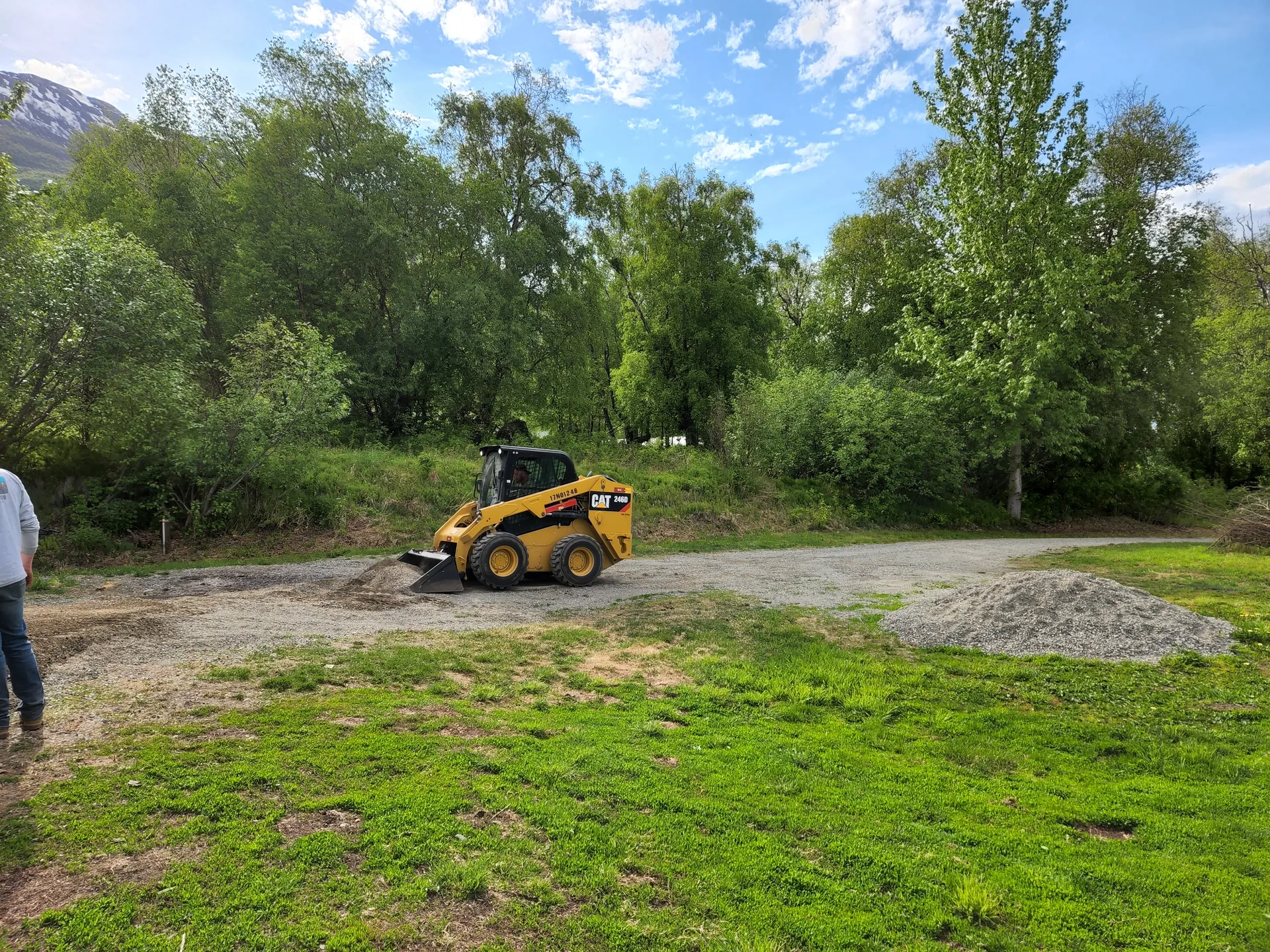
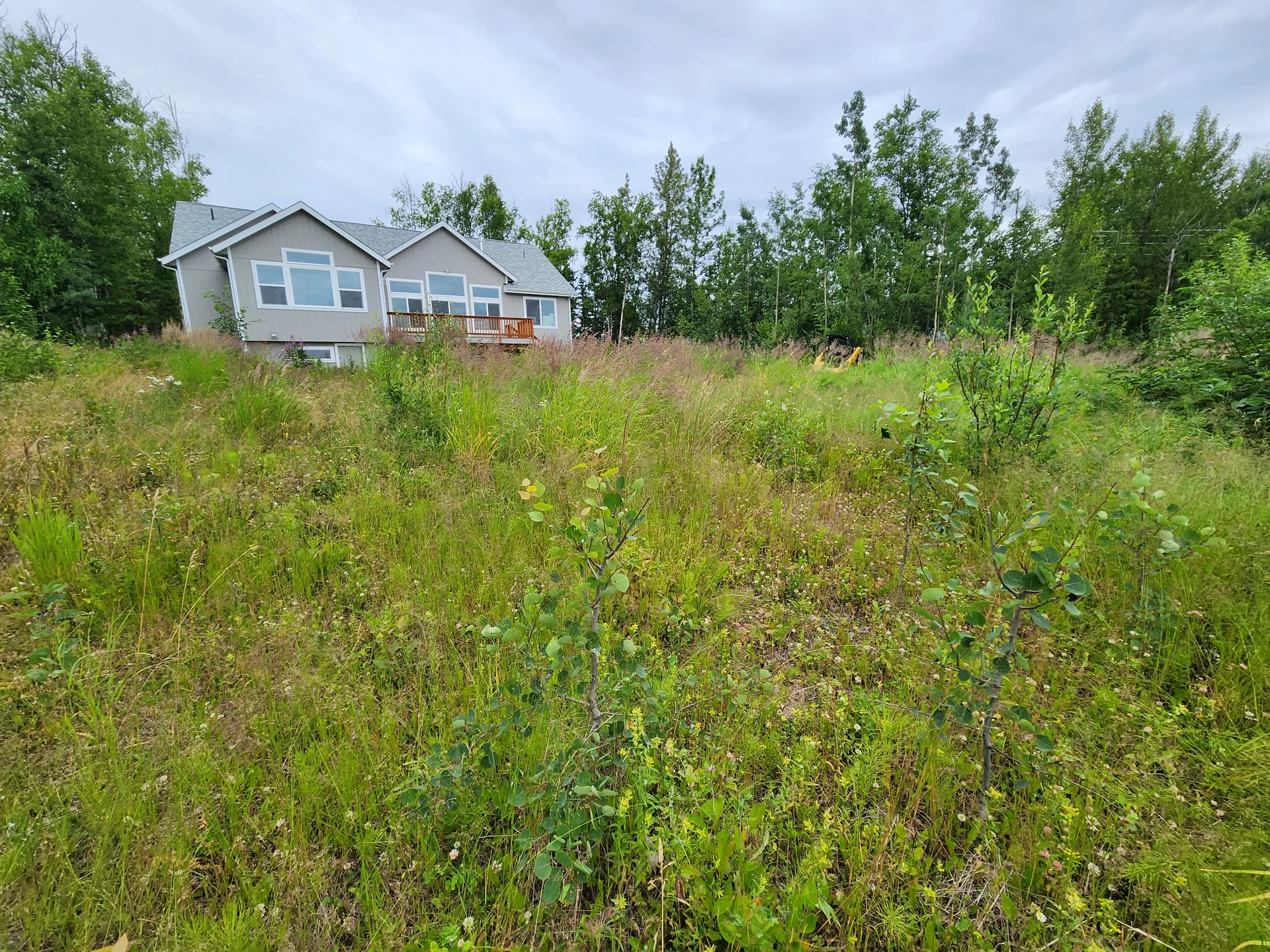
Yard installation in Wasilla, AK usually starts in one of two places: a new home sitting on raw fill, or an older yard that has never grown well. In both cases, spot seeding and patching rarely last. The ground underneath needs to be shaped and built up before grass has a fair chance.
- A new build with bare gravel, clay or construction debris around it
- Thin, patchy grass that never fills in, even with regular watering
- Puddles that sit on the lawn after rain or snowmelt
- Moss, weeds or mushrooms taking over shady or wet areas
- Ruts and low spots left behind by equipment or old projects
A full installation fixes the cause, not just the surface. We correct the grade, add the right amount of soil and seed the whole area at once, so the new lawn comes in evenly instead of in mismatched patches.
New Construction Landscaping That Starts With the Grade
A new lawn is only as good as the grade under it, which is why every yard installation in Wasilla, AK starts with grading. The ground around a house should fall away from the walls so rain and snowmelt drain off the property instead of toward the foundation. University of Alaska Fairbanks Cooperative Extension suggests a slope of 1 to 2 percent, which works out to a 1 to 2 foot drop over 100 feet.
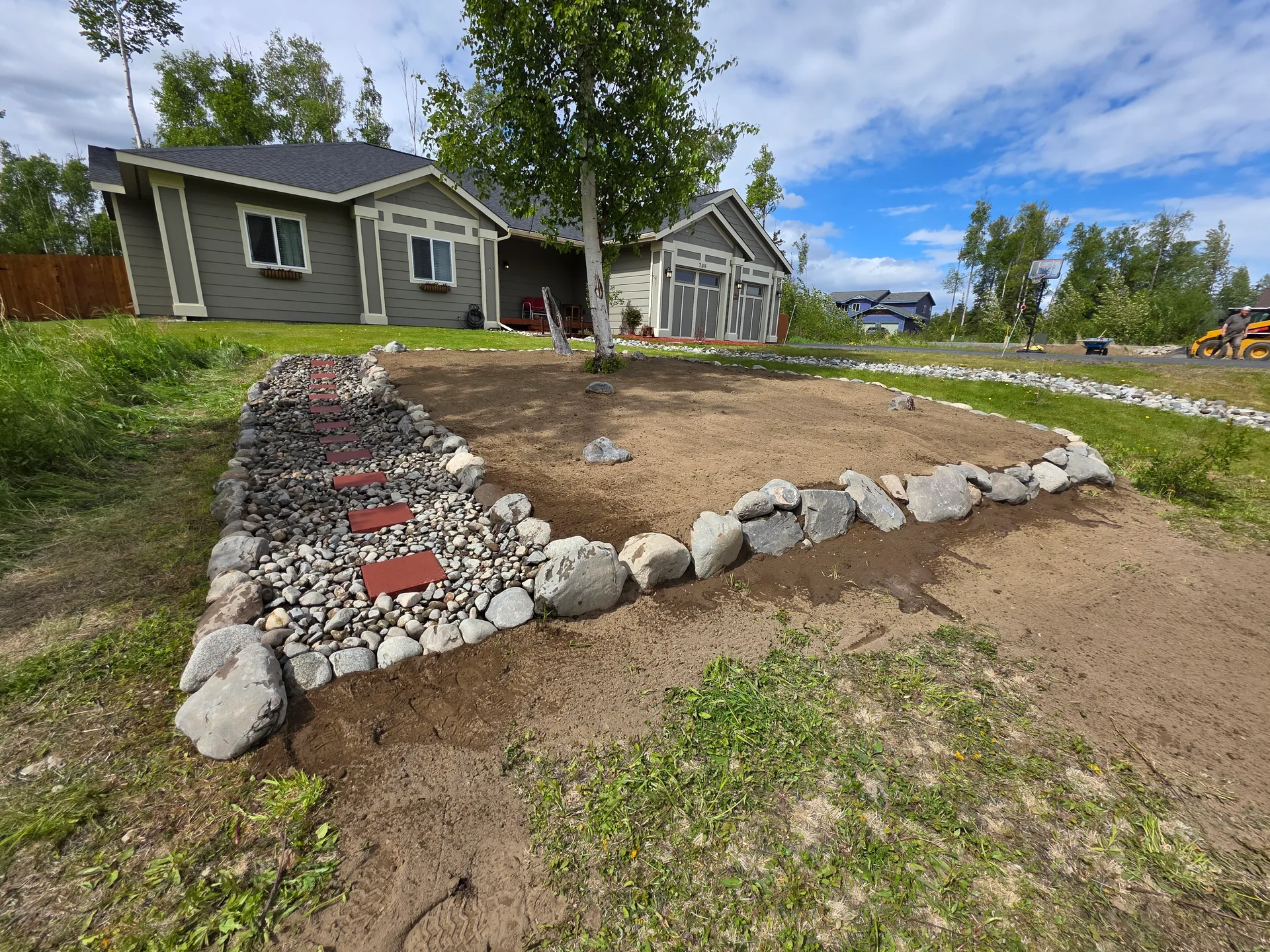
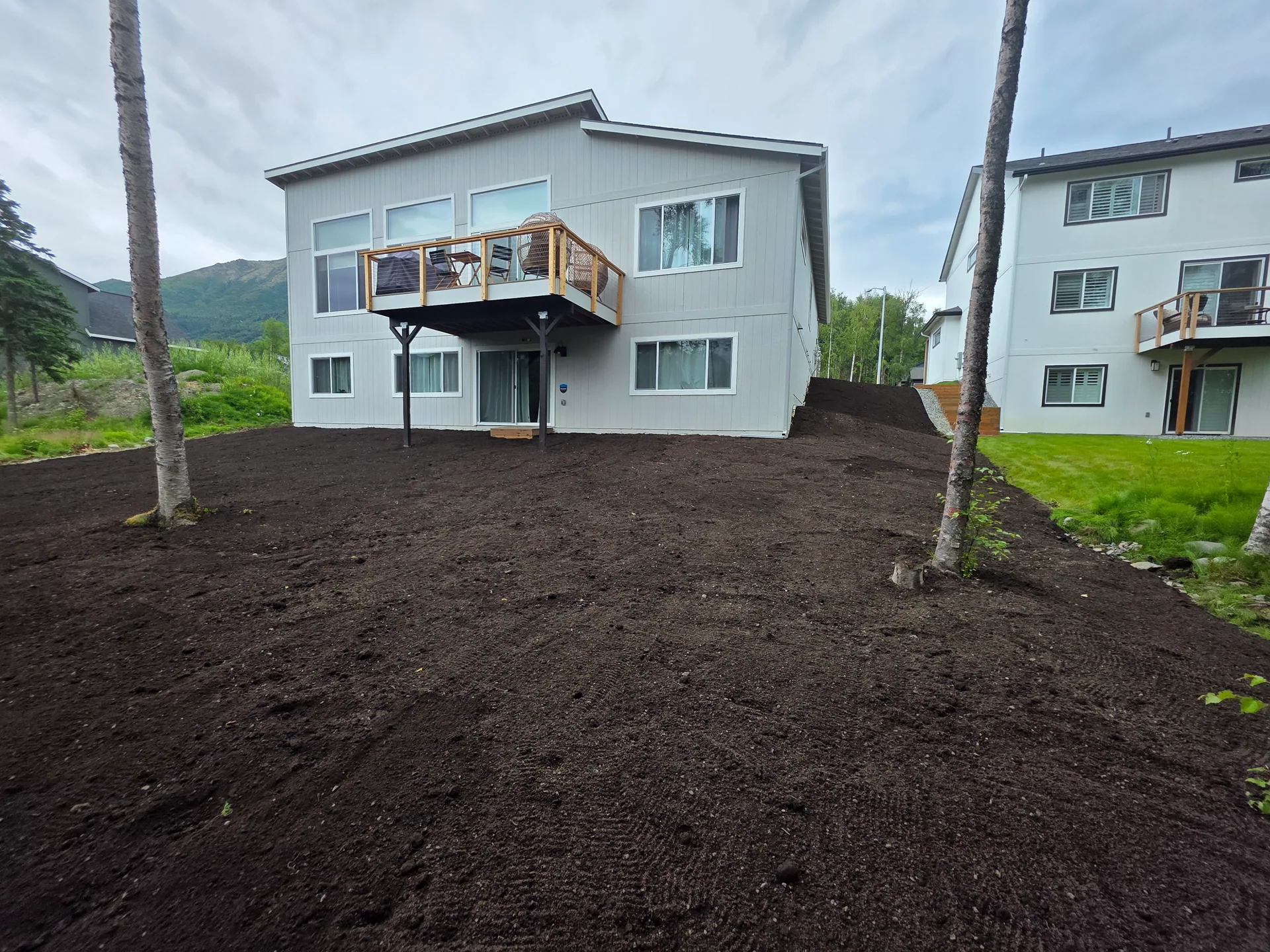
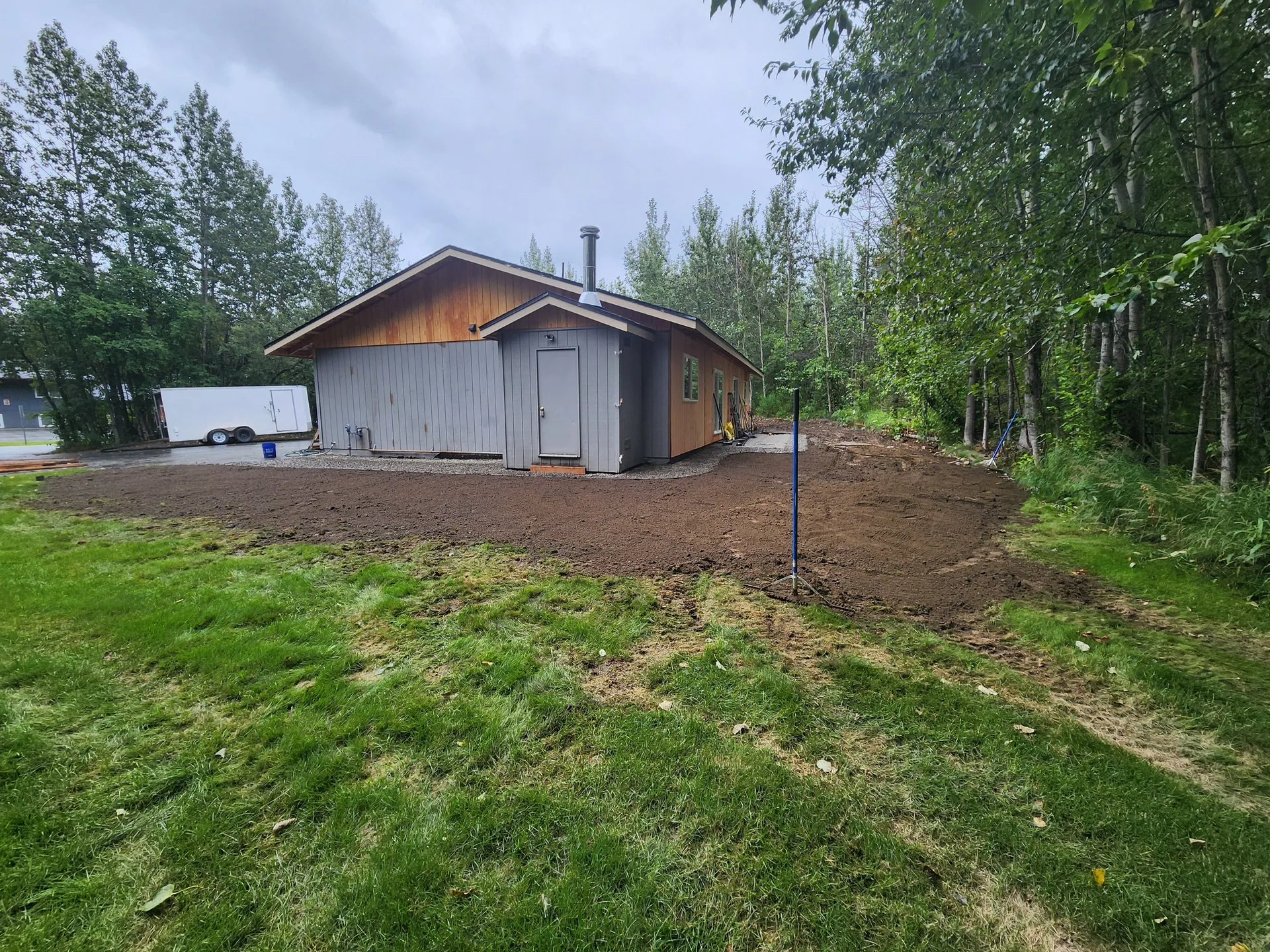
On new construction landscaping, we shape that slope first, then set the soil about an inch below sidewalks and driveways so the finished turf sits flush instead of spilling over the edges. Rocks, roots and leftover building debris come out before any soil goes down.
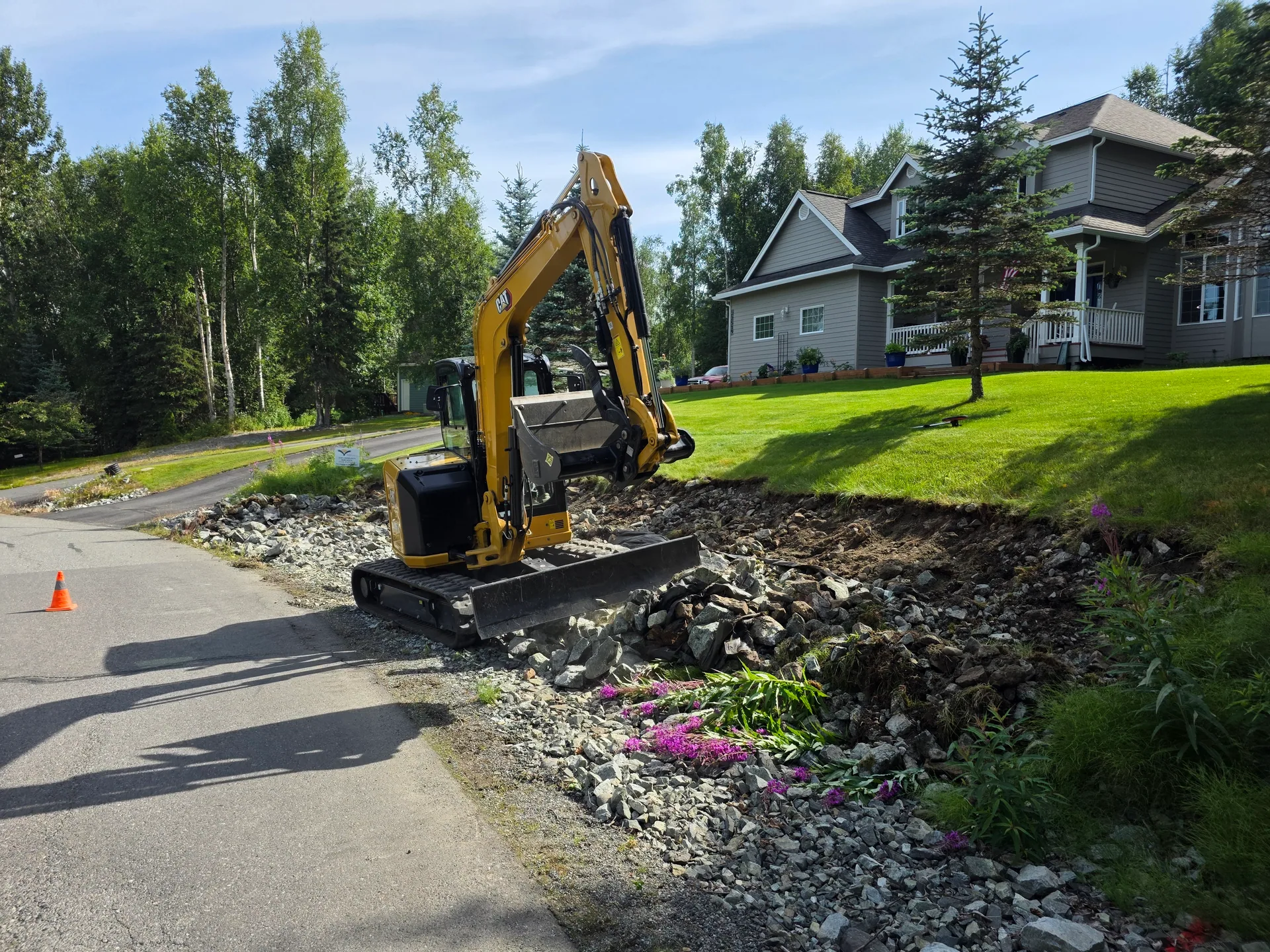
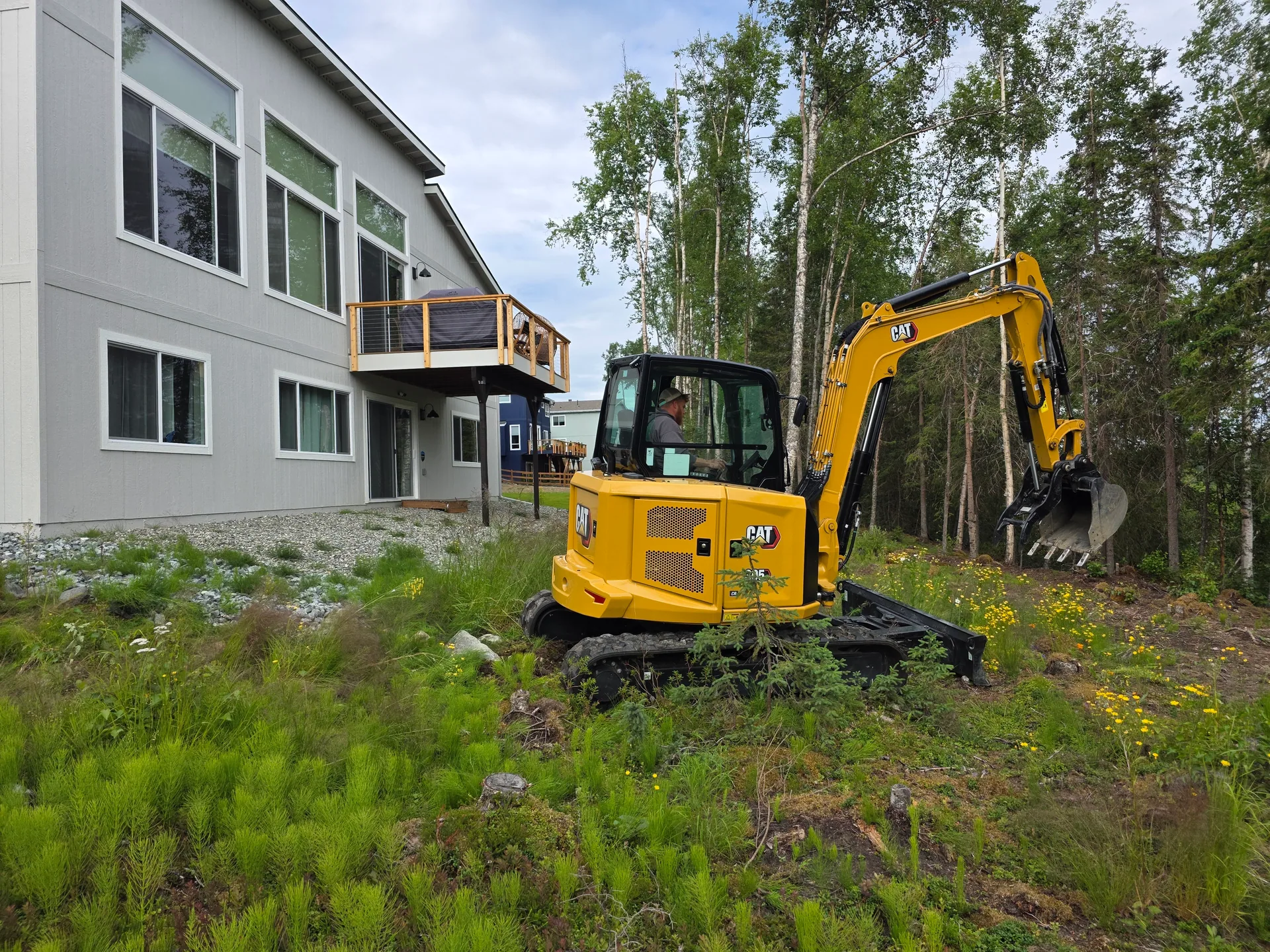
Where the lot needs more than surface grading, such as a buried drain or a low area that collects water, our excavation and drainage crew handles that work first. Fixing drainage before the lawn goes in keeps you from tearing up new grass a year later.
How Much Topsoil Wasilla Lawns Really Need
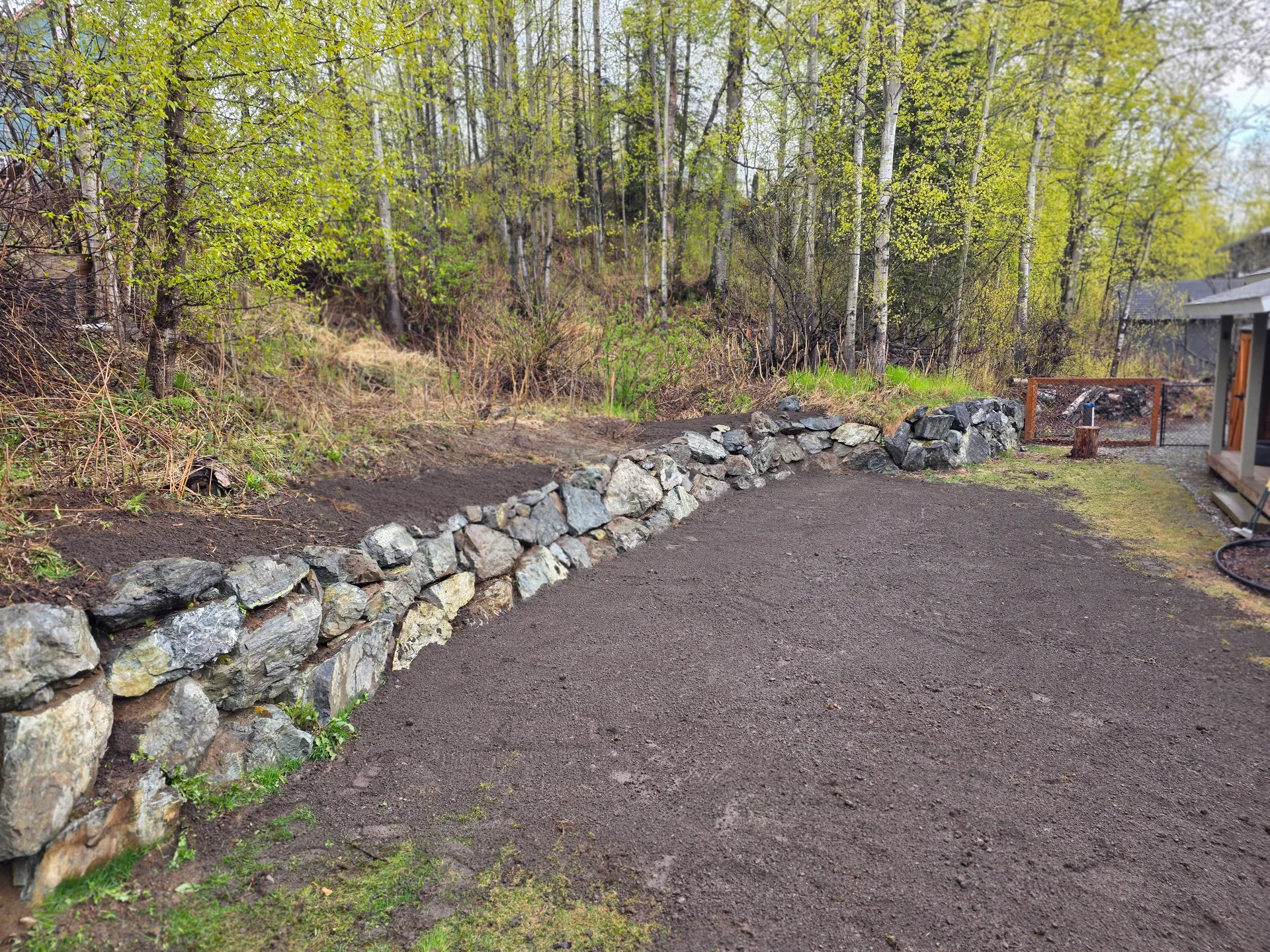
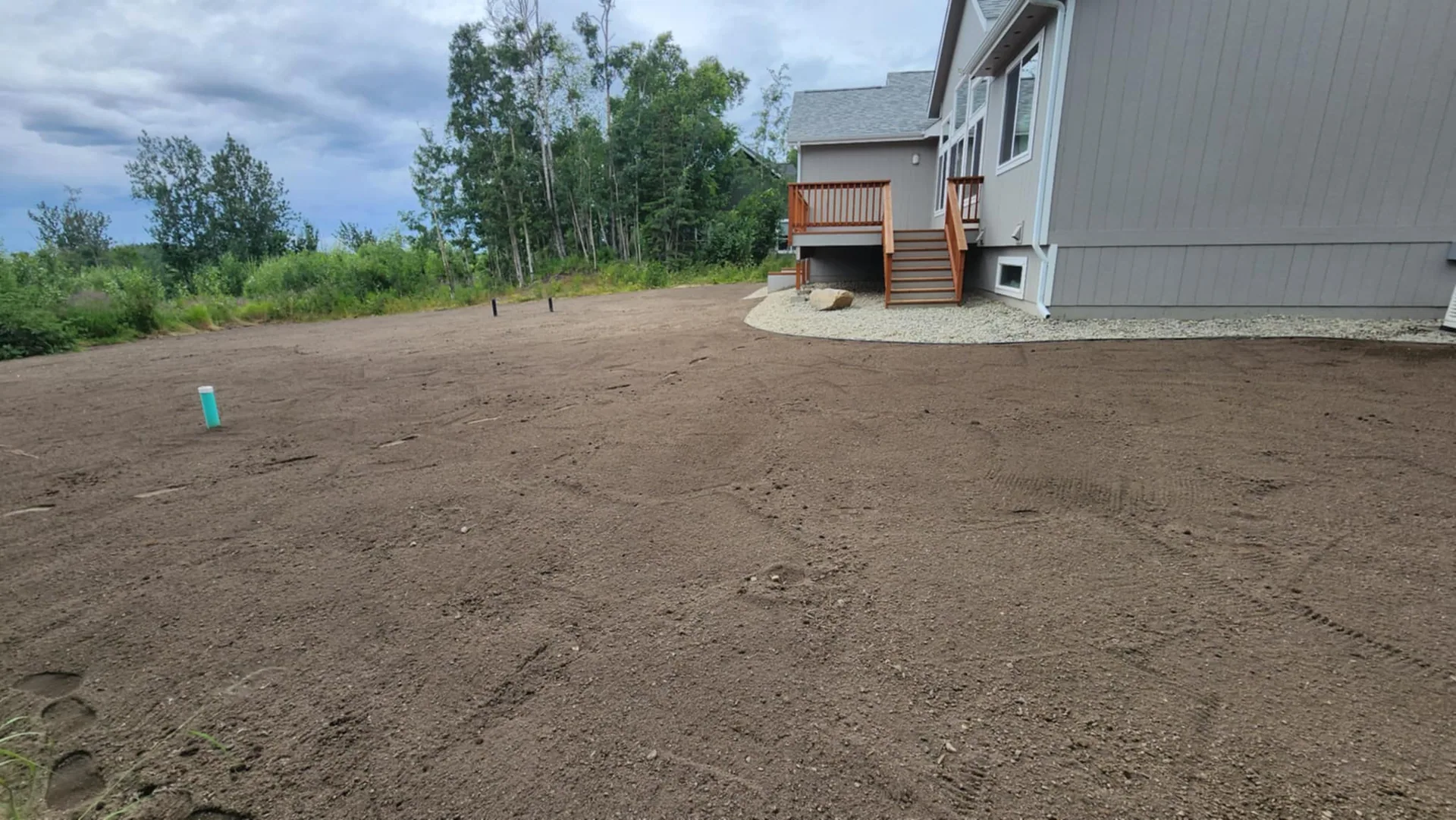
Lawns are less fussy about soil than vegetable gardens, and they do not need premium topsoil to grow well. What they need is enough depth over ground that drains. Cooperative Extension guidance for Southcentral Alaska calls for a base layer of at least 4 inches of topsoil over well-drained material.
Depth on delivery is not depth after a season. Manufactured topsoil can settle by as much as half, so we plan the amount with that in mind. A thin layer that settles to an inch or two dries out fast and leaves the lawn struggling every summer.
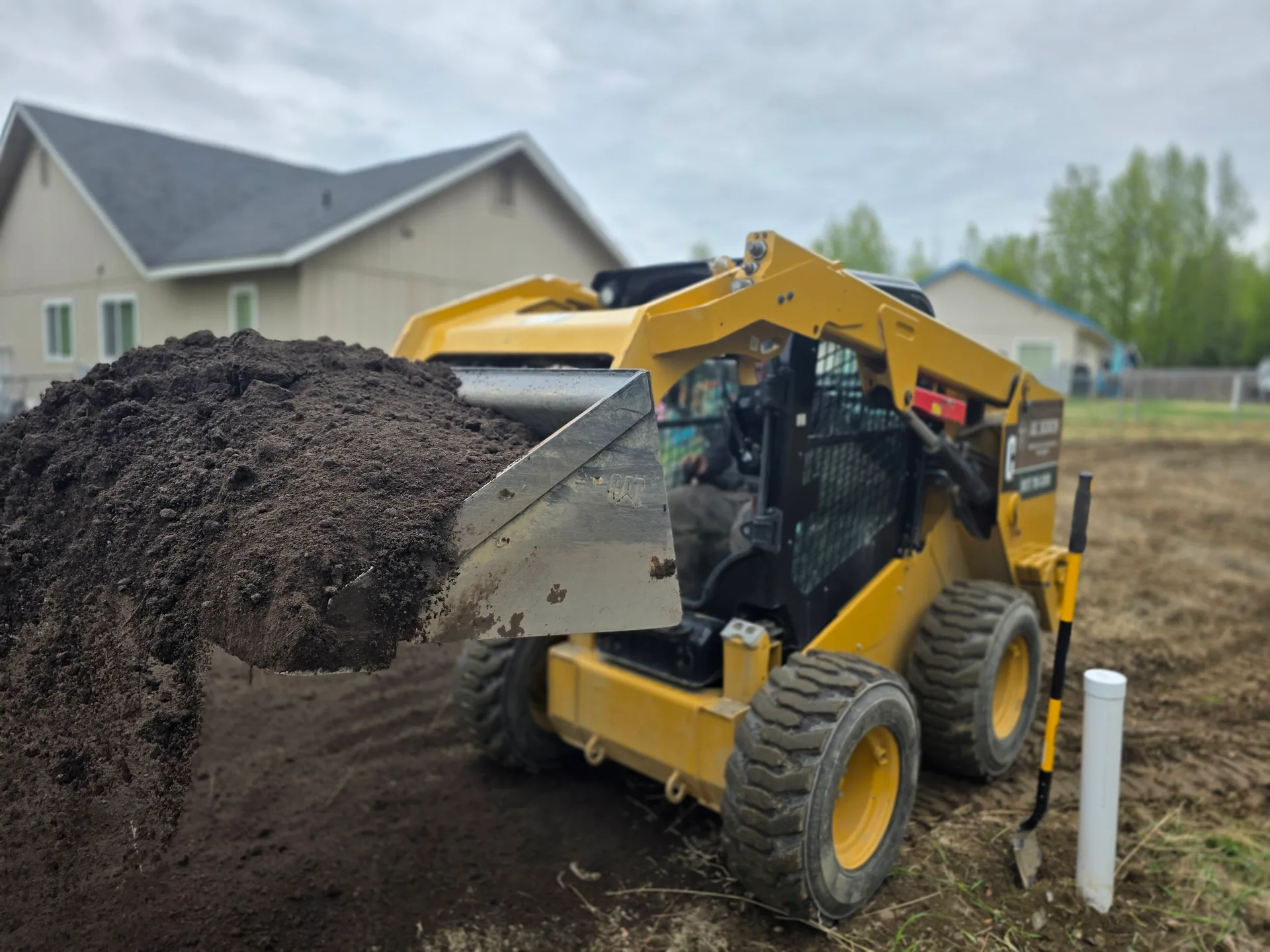
Before spreading, we look at what is already on site. Some lots have usable native soil that only needs to be loosened and leveled, while others are mostly gravel. Spreading topsoil in Wasilla yards that already have a good base wastes money, so the plan matches the ground you have. A soil test can also show whether lime or fertilizer is needed before seeding.
Hydroseeding Wasilla Yards for Even Coverage
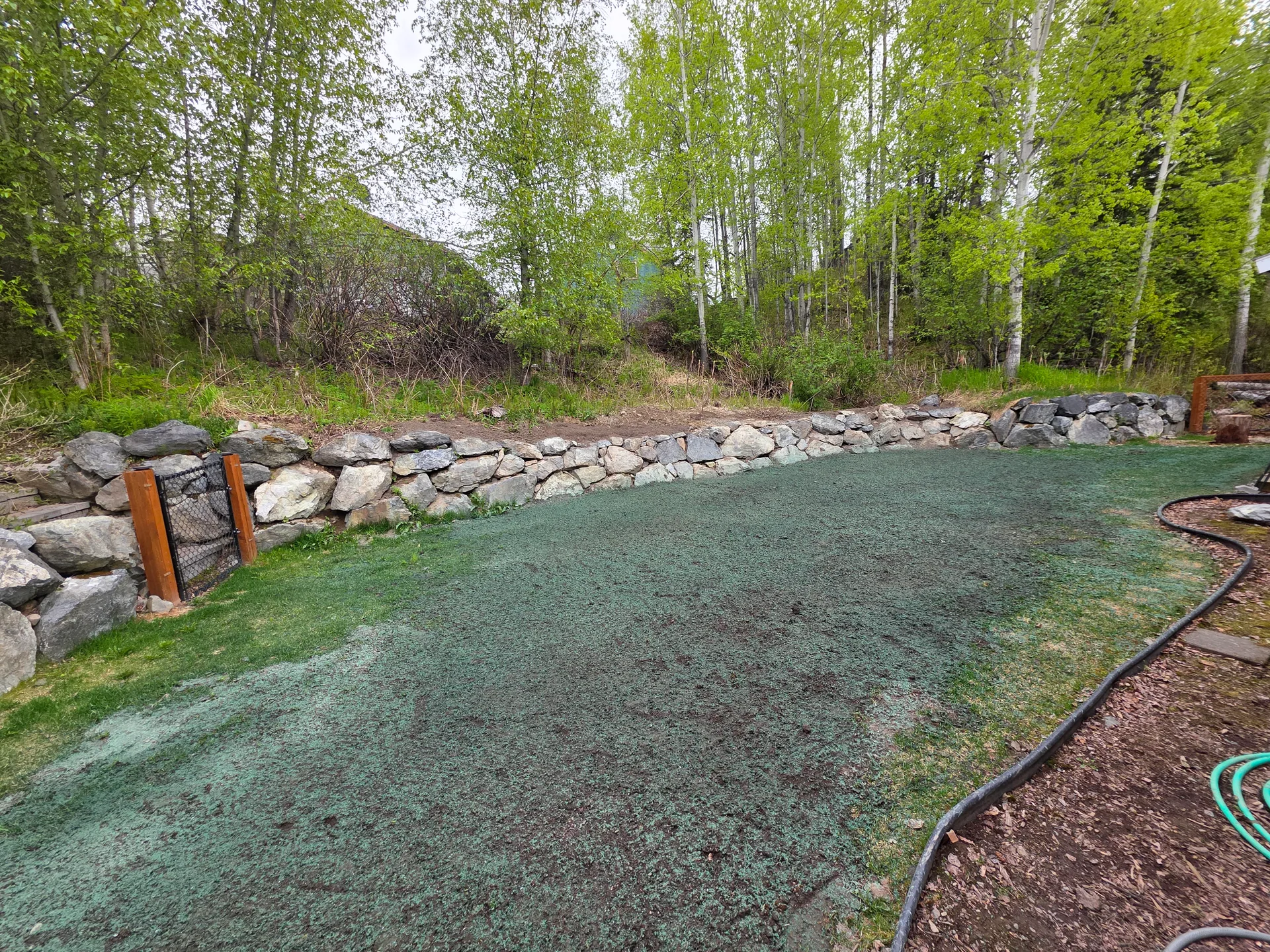
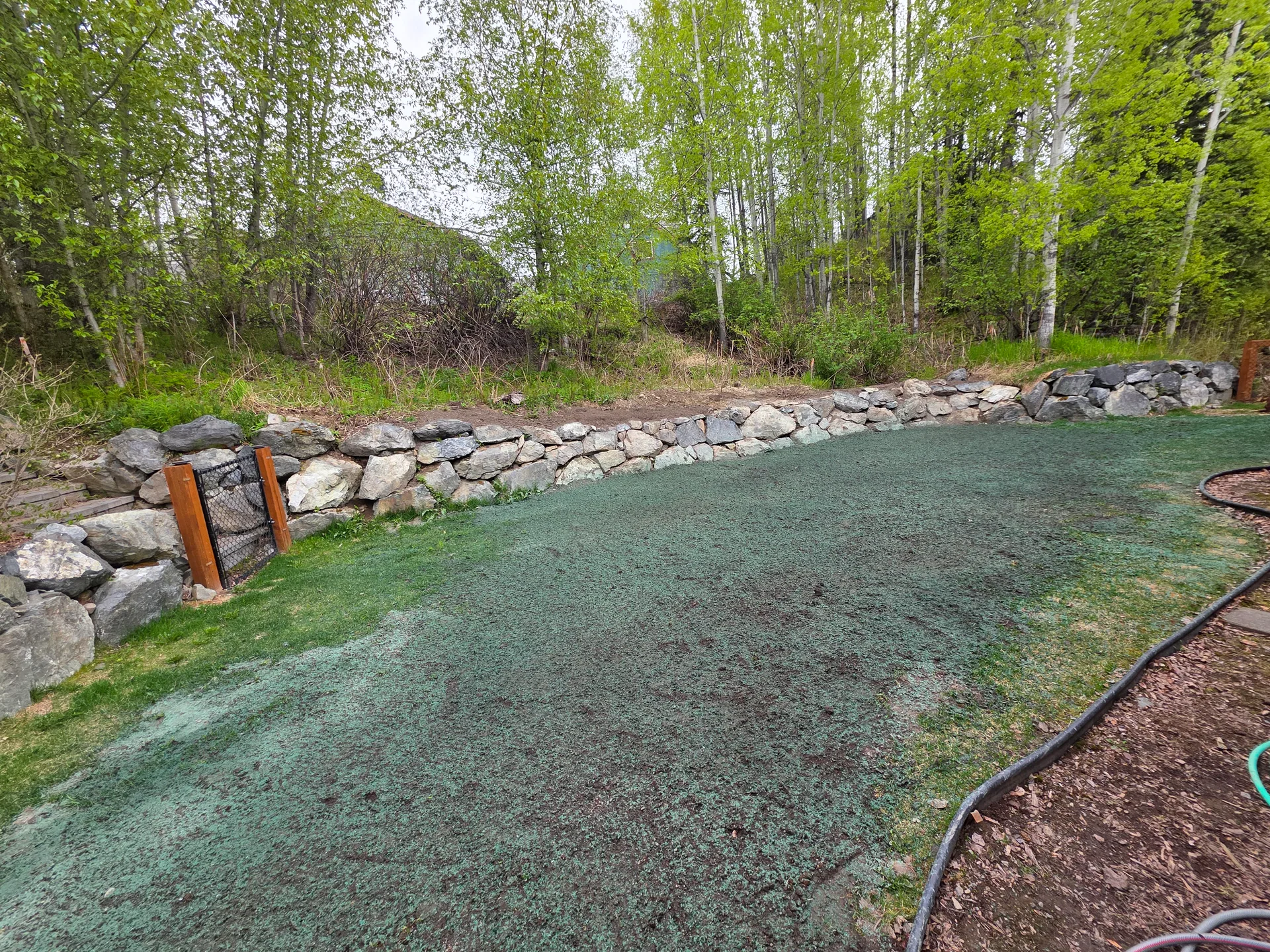
Hydroseeding sprays a slurry of water, wood fiber mulch, grass seed and fertilizer over prepared soil. The mulch holds moisture against the seed while it germinates, which helps when summer days are dry and windy. It also shows where seed has landed, so the whole yard is covered evenly.
It works especially well on slopes too steep to seed by hand, where loose seed and straw would wash away in the first heavy rain. In cost, it typically lands between seeding by hand and laying sod.
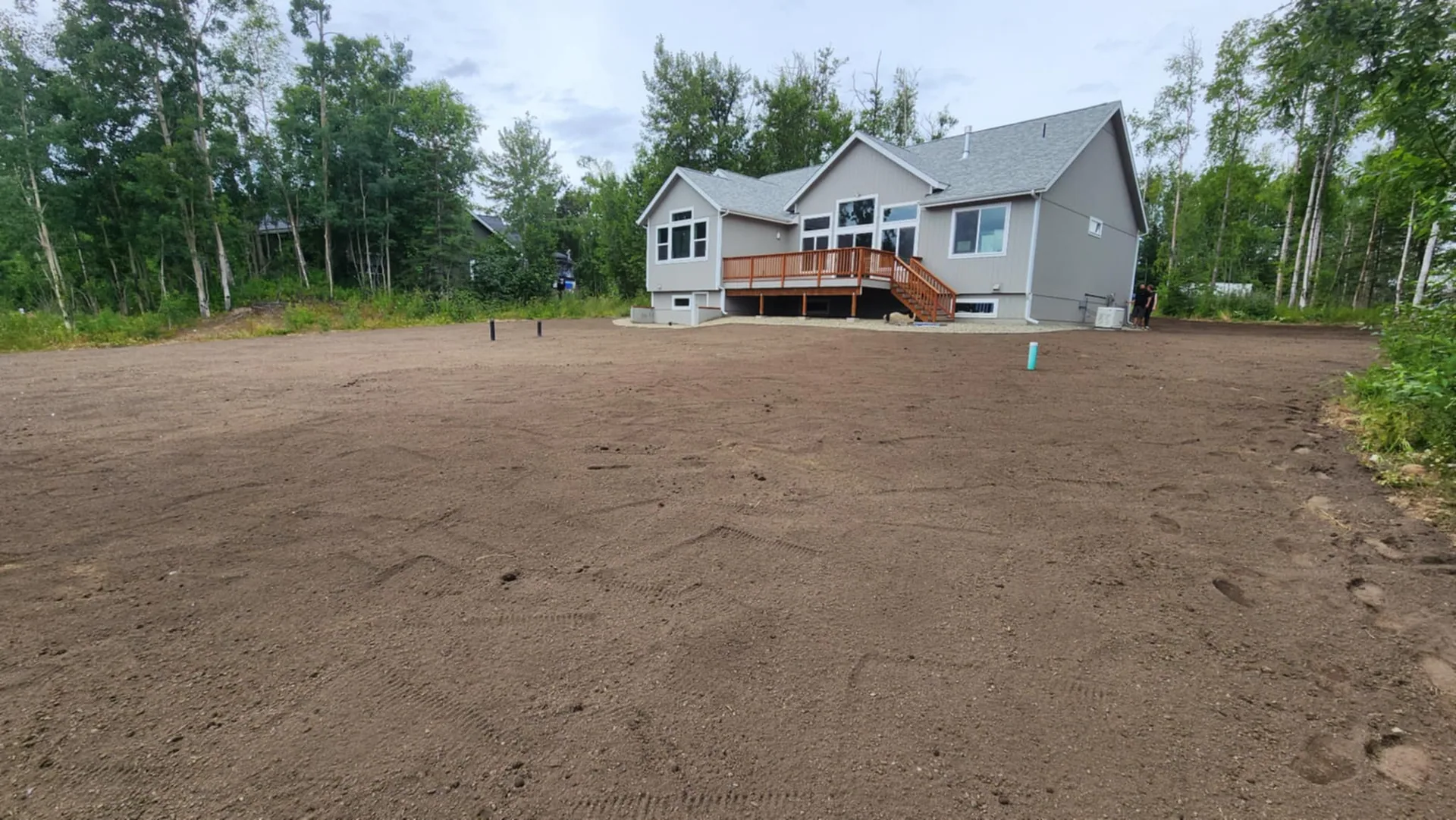
Hydroseeding in Wasilla still depends on the work done before it. Seed sprayed on a poor grade or thin soil will grow thin grass, which is why our crews do the grading and soil work first and spray last. The seed mix matters too: Extension guidance for this region pairs sun-loving Kentucky bluegrass with shade-tolerant red fescue, adjusted to how much sun the yard gets.
How a Yard Installation Comes Together
Most of the work in a new yard happens before any seed goes down. A careful order of steps is what keeps the grass from failing in its first winter.
-
Site Walk and Estimate
We look at the grade, the existing soil, sun and shade, and where water goes. You get an estimate for the grading, soil and seeding your yard needs.
-
Clearing and Rough Grade
Rocks, roots and debris come out, and the ground is shaped so it falls away from the house and drains off the property.
-
Topsoil and Final Grade
Topsoil is spread to the right depth, then raked and rolled smooth so the finished lawn has no low spots or ridges.
-
Hydroseeding and Care Notes
The seed slurry goes down, and you get clear watering steps for the first weeks, while the new grass is most fragile.
Lawn Installation Wasilla Timing and the Short Season
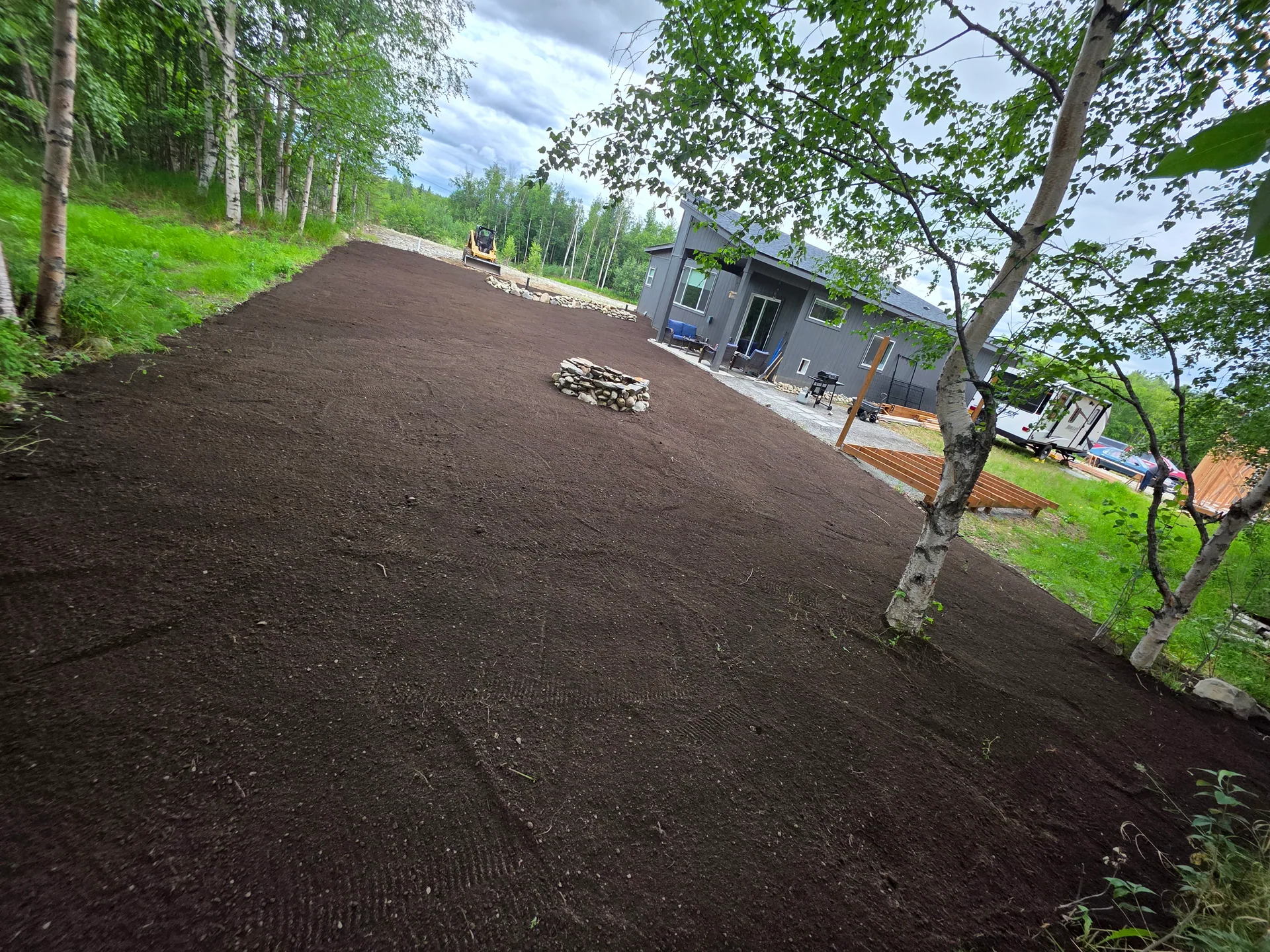
Southcentral Alaska has a short, cool growing season, and timing makes or breaks a new lawn. Extension guidance puts the usual seeding window from the beginning of June to mid-July. Lawns without irrigation are sometimes planted in August, but that is a gamble against an early winter.
Seeding in that window gives the grass enough weeks to root before the first hard freeze. Grading and soil work can start as soon as the ground has thawed and dried enough to work, so the yard is ready when seeding time arrives. Booking your lawn installation in Wasilla early in the year makes it easier to land a spot in that window.
Watering is the other half of the job. The soil should stay moist until the seed sprouts, which usually means several light waterings a day. After that, watering every two days is generally enough in Southcentral Alaska, then about once a week after the first mowing.
What Shapes the Cost of Yard Installation in Wasilla, AK
Every yard installation in Wasilla, AK is priced after a site visit, because the cost depends far more on the ground than on the square footage alone. Two lots of the same size can need very different amounts of work.
Grading is often the largest variable. A lot that only needs leveling costs less than one that needs fill brought in, high spots cut down or a drainage problem fixed. The amount of topsoil is next: a gravel lot needs a full layer, while a lot with usable native soil may need much less.
Access, slope and size round out the estimate. Steep areas, tight side yards and lots with many trees take more time to prepare. Our estimates list each part of the job, so you can see where the cost comes from and decide which areas to finish first.
Why Property Owners Choose AK Renew LLC for New Yards
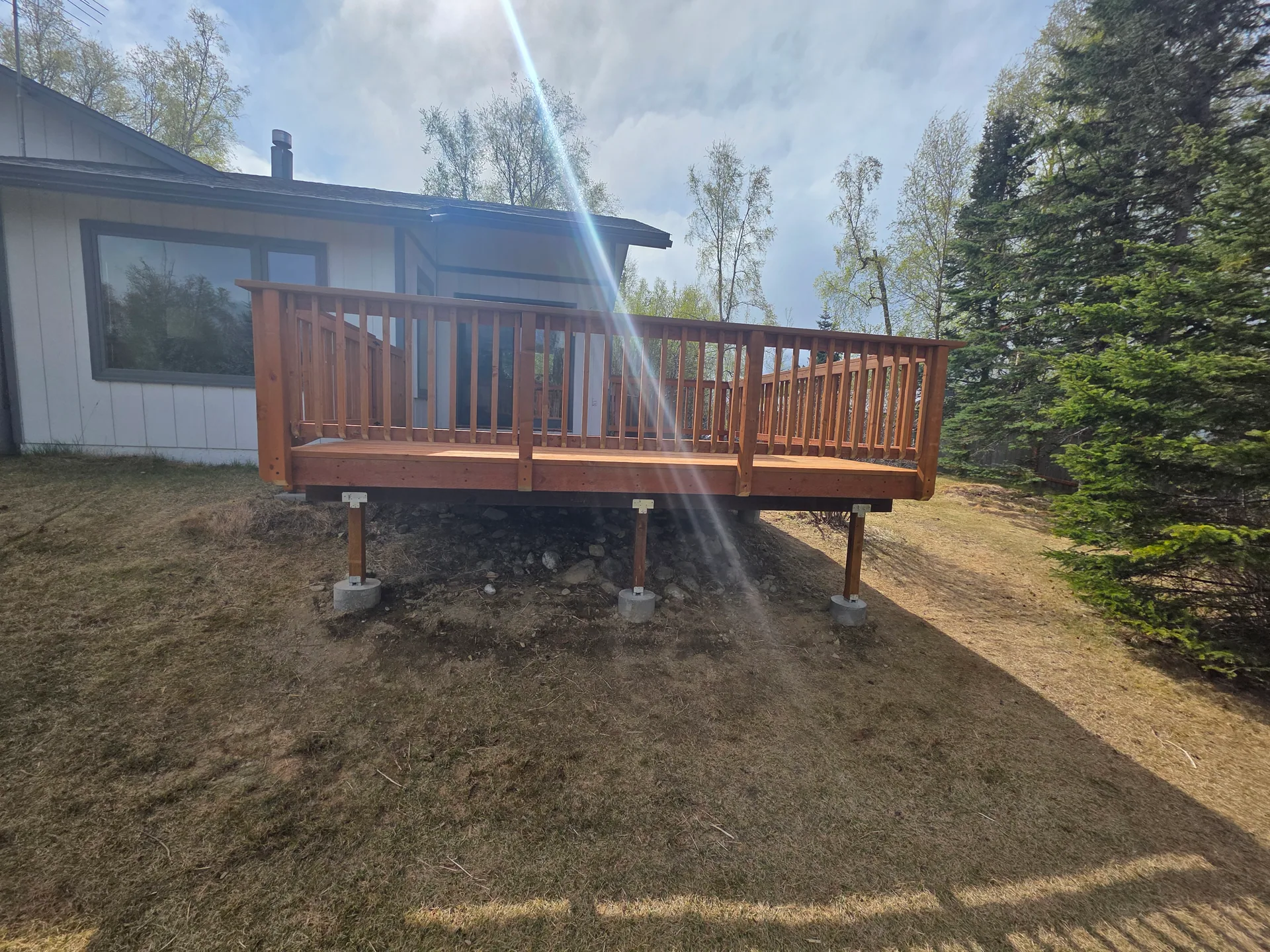
AK Renew LLC is a family-owned and operated licensed general contractor that has served Wasilla and the Mat-Su Valley since 2018. Our team brings more than 20 years of hands-on experience in landscaping, excavation and construction, and installing new lawns is one of the jobs our customers ask for.
That background shows in the parts of a yard installation in Wasilla, AK that nobody sees. Grading, drainage and soil depth decide whether a lawn thrives or fades, and our crew handles all three. We work on new homes, rental properties, cabins and commercial spaces, and we plan each yard for long-term value rather than a quick green-up.
When the lawn is part of a larger plan, the same team can help you lay out beds, paths and gathering spaces through our outdoor design service. You can also see our full range of landscaping services in the Mat-Su Valley.
Yard Installation Around the Mat-Su Valley
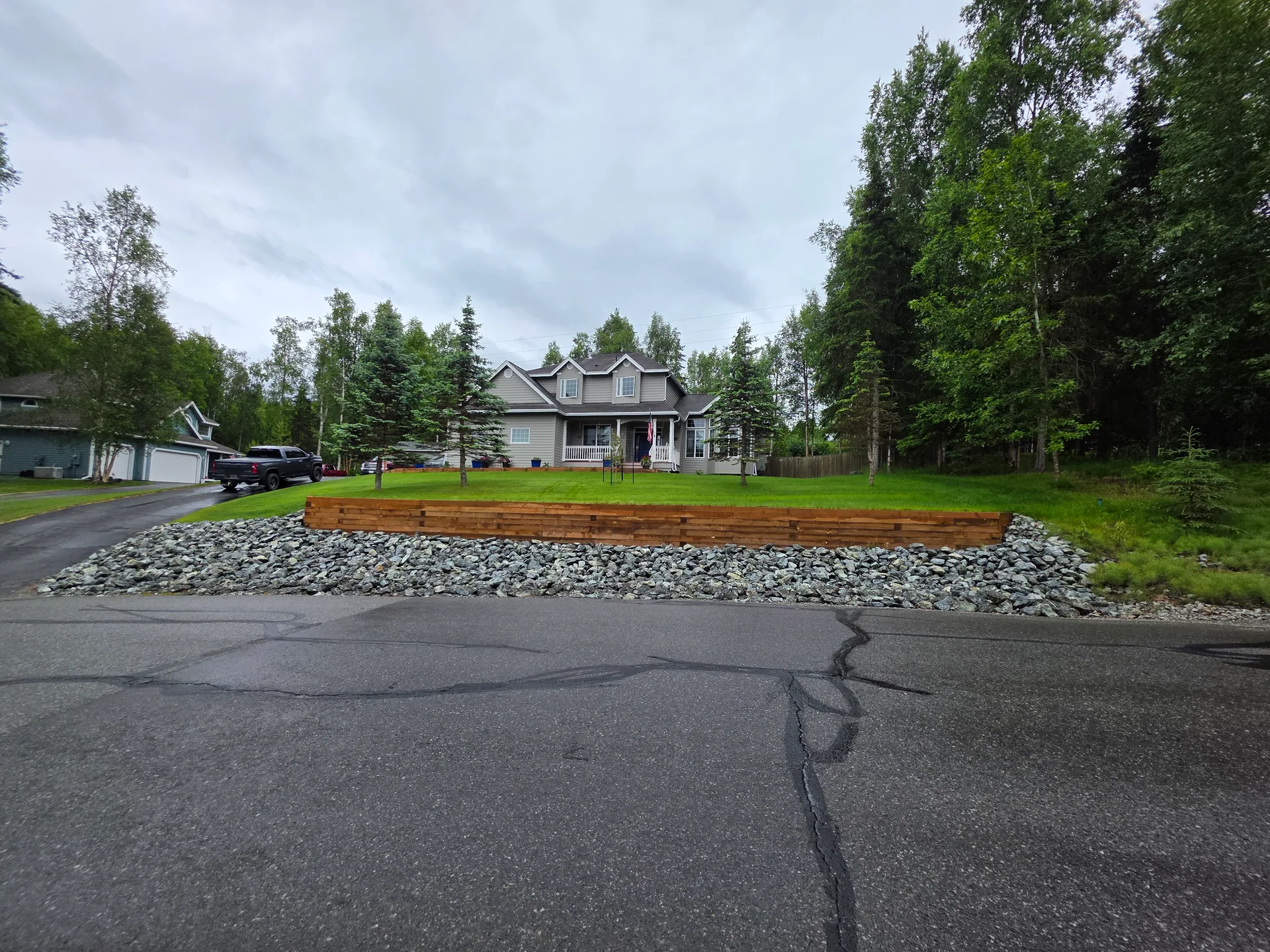
Our yard installation in Wasilla, AK reaches well past town. Crews install new yards in Wasilla and the surrounding communities, including Palmer, Knik-Fairview and Chugiak. New subdivisions, older homes and rural parcels all come through our schedule each summer.
The work changes with the lot. A new home near town may need finish grading and a fresh layer of soil, while a larger rural parcel may need clearing, drainage and a much bigger seeding area. Lots on gravel and lots that hold water each need their own plan.
Wherever the yard is, the season is the same short one. Planning ahead lets us prepare the ground as soon as it is workable and seed during the window that gives your new lawn its best start.
Questions About New Lawns and Hydroseeding
When is the best time to seed a new lawn in the Mat-Su Valley?
The usual seeding window in Southcentral Alaska runs from the beginning of June to mid-July, according to University of Alaska Fairbanks Cooperative Extension. That timing gives grass enough weeks to root before winter. Grading and soil work can start earlier, as soon as the ground is thawed and dry enough, so the yard is ready to seed once the window opens.
How long does a hydroseeded lawn take to grow in?
New grass usually starts to show within a few weeks, depending on weather and watering. The seed needs steady moisture until it sprouts, so several light waterings a day help it along. The lawn fills in over the rest of the summer, and keeping foot traffic, pets and vehicles off it during that time protects the young roots.
Do I need new topsoil if my yard is mostly gravel?
In most cases, yes. A lawn on gravel dries out fast and struggles to root. Extension guidance for Southcentral Alaska calls for at least 4 inches of topsoil over well-drained material, and manufactured topsoil can settle by up to half. We check what is on your site first, since some lots have usable soil that only needs leveling.
Should I choose hydroseeding or sod for a new yard?
Hydroseeding usually costs less than sod and covers large or sloped yards well, since the mulch holds the seed in place. Sod gives an instant lawn, but costs more and needs careful watering to root. For most new construction yards in the Valley, hydroseeding on well-prepared soil gives an even, lasting lawn at a lower price.
How should I water a newly seeded lawn?
Keep the soil moist until the seed sprouts, which usually means several light waterings a day. Once the grass is up, watering every two days is generally enough in Southcentral Alaska. After the first mowing, cut back to about once a week, aiming for roughly an inch of water per week from rain and sprinklers combined.
Yard Installation Reviews From Our Customers
Property owners share how their yard projects went, including the communication along the way and the quality of the finished ground.
-

Kirsten Anderson
a month ago
Rated 5 out of 5
Hired AK Renew to help us with fixing our driveway which was experiencing flooding and drainage challenges. We were concerned about pricing and Nick gave us two reasonable estimates to choose from. When we moved in 7 years ago, there was a drainage pipe that ran across our driveway to help with drainage from rain and winter snow melting. Over the years and multiple winters frost heaving had pushed the drainage pipe up, out of the ground, making it difficult to drive in and out of the driveway. We actually had people getting stuck with their vehicles on the pushed up and exposed drainage pipe. AK Renew came in, dug up the area and removed the old drainage pipe and put a new larger drainage pipe in, and built out the drainage on both the sides. He also brought in dirt, gravel, and rock to create better drainage and to cover the portion of the driveway had to be removed in order to build up the area so it could be smoothly driven across. Nick did a phenomenal job replacing the driveway drainage pipe, fixing the drainage issue, and the pricing was reasonable. If I needed more driveway and drainage repair work done, I would not hesitate to contact AK Renew again. If you are looking for a reasonable company who understands the challenges of drainage in the valley, AK Renew is local and can come up with knowledgeable solutions for you.
-

Melissa Biggs
a month ago
Rated 5 out of 5
⭐⭐⭐⭐⭐ Outstanding Workmanship, Professionalism, and Customer Service! I couldn't be happier with my experience with this company! From the very beginning, Nick took the time to work with me, revising my estimate several times to accommodate my specific needs and budget. That kind of attention to detail and willingness to work with a customer really stood out to me. The foundation for my Trex deck was completed in just a few hours, and the workmanship was excellent. Everything was squared, leveled, and prepared exactly as needed so I could move forward with building my deck. The crew was efficient, professional, and timely, and the entire process was smooth from start to finish. What impressed me just as much as the quality of the work was his commitment to customer satisfaction. Knowing I would be building the deck myself, he encouraged me to reach out if I had questions along the way. When I did contact him, he was responsive and helpful. It's refreshing to work with a company that takes pride in its work and genuinely wants its customers to succeed with their projects. It's not just about getting the job done; it's about how you're treated throughout the process. This company delivered on both. Excellent workmanship, outstanding professionalism, prompt service, and a genuine commitment to customer satisfaction. I would absolutely recommend this company to anyone looking for quality work and a contractor who stands behind what he does. You won't regret giving him your business!
-

Ashlyn Alkire
4 months ago
Rated 5 out of 5
Great communication and does quality work.
-

Gabriela Olide
5 months ago
Rated 5 out of 5
Friendly, great customer service, does a wonderful job. Very happy with the work. Would recommend and use again!
-

Kenneth Broughman
a year ago
Rated 5 out of 5
Nick and his team did a terrific job! We needed a new lawn in our backyard and his team did not disappoint! He was prompt with the quote, timely with the scheduling did a great job. The price was right, the crew was professional, work was completed on time...I plan on calling them back next spring for some more work and will recommende AKRenew to anyone with landscaping needs!
-

Phillip C
a year ago
Rated 5 out of 5
Awesome work and great prices. Ill be hiring again for future projects.
-

Steven Barney
a year ago
Rated 5 out of 5
Reliable and professional!!!
-

Bear Paw
2 years ago
Rated 5 out of 5
We’ve had Nick come and do several projects for us. Painting exterior, roof work, and redo of master bath, along with a few odds and ends. He is very detailed oriented, punctual, trustworthy and just a great worker. He’s prices are also great. If I have anything that needs done AK Renew is definitely at the top of my list to call. I highly recommend AK Renew!
-

Travis Heintzman
3 years ago
Rated 5 out of 5
They are amazing. The driveway they installed is awesome. Good quality and affordable. Their kindness and professionalism is on point. I highly recommend them.
-

Elizabeth Brock
7 years ago
Rated 5 out of 5
We hired Nick to fix some damage our dog had done in the home we were renting. His work was amazing and you couldn’t even tell there was any damage! He is so nice, punctual and professional. HIGHLY RECOMMEND.
-

Hayley Gillispie
7 years ago
Rated 5 out of 5
Nick has repaired a few of the things within my apartment. The kitchen faucet had a leak, the bathroom fan had an awful grinding sound, and a piece in my dish washer had fallen out of place after the earthquake and melted, rendering the whole appliance useless. His work has been beautiful and his customer service skills are superb. I strongly recommend this business to anyone who has any household repairs that need to be done.
-

Chaz Pereda
8 years ago
Rated 5 out of 5
Very professional and very friendly! My family and I are very pleased with the services done by Nick. Price was very good considering how big my house is, he also gave me a military discount! Thanks again Nick.
Customer
Call AK Renew LLC at (907) 795-0369.
Turn Bare Ground Into a Lawn This Summer
The seeding window here is short, and the yards that come in best are the ones planned before it opens. A site visit now lets us sort out the grade, the soil and the schedule, so your new lawn goes down at the right time and has a full season to root.